
Calgary Hot Tub Installation Checklist: Requirements, Permits, Costs & More
Installing a hot tub in Calgary? Learn electrical requirements, permit rules, installation costs, and when a panel upgrade may be needed.
Written by the FuseSmart Electric Team & Reviewed by Jesse Tompkins
Key Takeaways:
Most hot tubs in Calgary require a dedicated 240V circuit, GFCI protection, a disconnect switch, and outdoor-rated wiring installed in protective conduit.
Electrical capacity should be assessed before purchasing a hot tub to determine whether a panel upgrade, load management solution, or other electrical modifications may be needed.
In Calgary, permanently installed hot tubs must be wired by a qualified electrical contractor and typically require permits and inspections.
Total project costs often extend $2,000-$10,000+ beyond the cost of the hot tub itself when electrical work, permits, site preparation, trenching, delivery, and site-specific upgrades are included.
Poor placement decisions can create long-term issues with accessibility, drainage, maintenance, winter use, and installation costs.
Hot tub installation in Calgary involves more than choosing a model and deciding where it will sit. Electrical requirements, permit approvals, site preparation, and overall project costs can all affect how smoothly the installation goes.
For homeowners planning a new hot tub, jacuzzi installation, spa installation, or even a home sauna, understanding the electrical side of the project early can help avoid delays, unexpected costs, and code compliance issues. This checklist covers the key requirements, costs, and planning considerations before installation begins.
Calgary Hot Tub Installation Planning Checklist
Before scheduling your hot tub delivery, make sure you've considered the following items (then read on to learn everything you need to know about hot tub installation):
☐ Confirm where you want the hot tub located
☐ Make sure there's enough space for delivery and future servicing
☐ Verify the area has proper drainage
☐ Ensure the location has a solid, level base
☐ Have your home's electrical capacity assessed by a licensed electrician
☐ Determine whether a panel upgrade or load management system may be needed
☐ Consider trenching requirements and wiring distance
☐ Confirm the location meets Calgary setback requirements
☐ Budget for permits, required electrical work, and site preparation—not just the hot tub itself
☐ Schedule a licensed electrician before delivery
☐ Booked inspections (or confirmed your electrician will handle them)
Depending on your project, you may also need other professionals such as landscapers, concrete contractors, or plumbers. If you're looking for a trusted plumbing contractor in Calgary, we're happy to recommend our local partner, Stampede Plumbing & Heating.
What to Know Before Installing a Hot Tub in Calgary
Hot tub installation projects often involve several trades and approvals working together. While the hot tub retailer typically handles delivery and positioning of the spa, a licensed electrical contractor is responsible for assessing electrical capacity, advising on panel capacity requirements, placement considerations, obtaining permits, coordinating inspections, and completing the electrical installation.
For most homeowners, it's beneficial to consult an electrician before scheduling delivery. An early assessment can help identify capacity limitations, trenching requirements, disconnect placement considerations, and potential code or permit issues before the hot tub arrives.
Before purchasing a hot tub, consider:
Available electrical capacity
Installation location
Delivery access
Drainage
Permit requirements
Winter accessibility
Long-term operating costs
Many Calgary homeowners discover after purchase that their existing electrical system cannot support the additional load. A professional assessment before ordering can help identify potential issues early and keep the project on schedule.
Choosing The Right Location
Choosing the right location is about more than convenience and aesthetics. The location affects electrical installation costs, permit requirements, long-term maintenance, safety, and overall enjoyment of the hot tub.
At FuseSmart Electric, we help homeowners evaluate potential hot tub locations by considering electrical access, trenching requirements, disconnect placement, panel capacity, and applicable City of Calgary requirements before delivery is scheduled.
We can also identify opportunities to reduce installation costs by evaluating wiring distances, trenching requirements, and electrical access before the final location is chosen.
Electrical Access
The location that works best from a landscaping perspective isn't always the location that works best for the electrical installation.
Hot tubs require a dedicated electrical circuit run from the home's electrical panel to the spa location. The farther the hot tub sits from the house or electrical panel, the more wiring, conduit, trenching, and labour may be required.
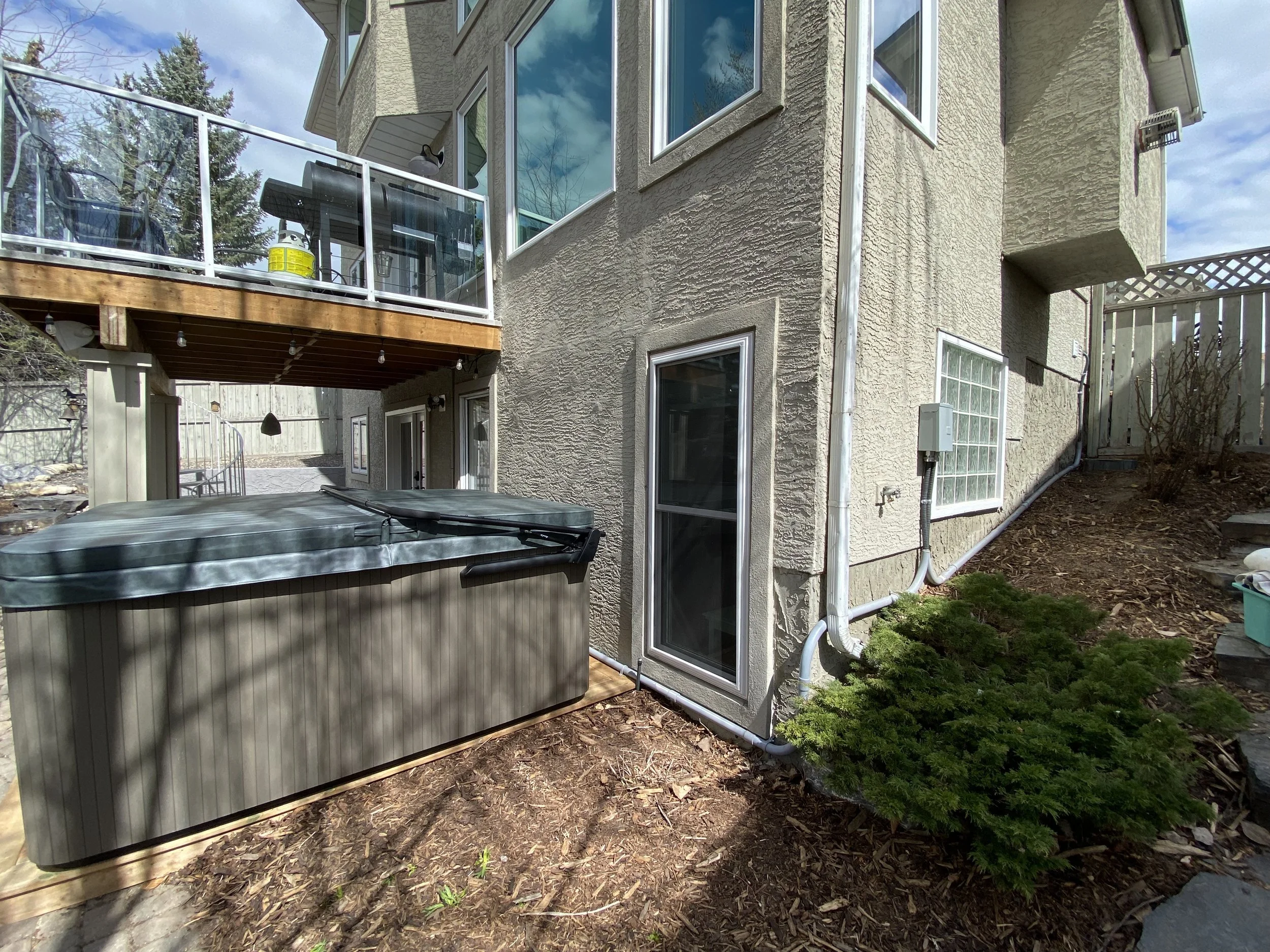
If the hot tub is located away from the home or electrical panel, wiring will often need to be buried underground in protective conduit that complies with applicable electrical and safety requirements.
A location that looks ideal from a backyard design perspective may significantly increase installation costs if electrical access is difficult.
Drainage & Surface Preparation
Drainage is often overlooked during hot tub planning.
Water from rain, snowmelt, and periodic draining should move away from both the hot tub and nearby structures. Poor drainage can create icy conditions in winter and may contribute to premature deterioration of surrounding surfaces.
The hot tub should also be installed on a solid, level surface capable of supporting the weight of the spa, water, and occupants.
Property Layout & Access
Property layout affects both installation logistics and future maintenance.
Decks, fences, retaining walls, narrow side yards, and elevated backyards can all impact delivery and future servicing access. In some situations, crane services may be required to position the hot tub safely.
Homeowners should also leave adequate clearance around the spa for maintenance, repairs, and servicing.
Calgary Setback & Placement Requirements
Hot tub placement must also comply with applicable municipal requirements.
Current City of Calgary requirements generally require hot tubs and swimming pools to be located at least 1.2 metres from side and rear property lines (but it’s always important to check the latest documentation). Hot tubs may not be located within the front setback area without additional approvals.
Overhead utility wires must maintain required clearances from hot tubs and swimming pools. Existing overhead wiring generally cannot pass directly over a hot tub unless specific requirements are met.
Additional approvals may be required if:
The hot tub is installed on a deck or elevated patio that may require engineering review or additional approvals.
The hot tub is located within a gazebo or covered structure that may require additional building or development permits depending on its size, height, and configuration.
The proposed location does not comply with setback requirements
Structural modifications are required
Because requirements can vary depending on the property, homeowners should verify current regulations before finalizing a location.
Electrical Requirements for Hot Tub Installation
Electrical requirements are one of the most important parts of any hot tub installation in Calgary. Most modern hot tubs require dedicated electrical infrastructure designed specifically for outdoor wet environments. Because permanently installed hot tubs must be wired by a qualified electrical contractor, it's important to understand the electrical requirements before selecting a location or scheduling delivery.
Dedicated Circuit Requirements
Most full-size hot tubs require a dedicated 240-volt circuit.
A dedicated circuit means the hot tub is the only equipment connected to that electrical supply. This helps prevent overloads and ensures the system operates safely under normal usage conditions.
Electrical requirements vary by manufacturer, so the electrician should always review the hot tub specifications before installation. Most Calgary hot tub installations also require a dedicated disconnect, GFCI protection, and outdoor-rated wiring installed in protective conduit.
GFCI Protection
GFCI protection is required because water and electricity create an increased shock risk.
A Ground Fault Circuit Interrupter (GFCI) is a specialized safety device designed to shut off power almost instantly if it detects an electrical fault that could create a shock hazard. This protection is a critical safety feature for hot tubs and outdoor spas.
The Canadian Electrical Code contains specific requirements for GFCI protection around hot tubs and similar installations. Proper installation helps protect users and supports compliance with current safety standards.
Disconnect Requirements
Most permanently wired hot tubs require a dedicated disconnect switch installed as part of the electrical system.
The disconnect provides a safe way to shut off power for maintenance, repairs, servicing, or emergency situations. While it must remain within sight of the hot tub, it must also be installed at a safe distance from the water and meet current electrical code clearance requirements.
The exact location depends on the equipment, installation method, and site conditions. A qualified electrician will determine the appropriate placement during the planning phase to ensure the installation remains both safe and code-compliant.
Outdoor-Rated Wiring and Underground Conduit
All outdoor hot tub wiring must be installed using wiring methods approved for outdoor use and protected within weather-resistant conduit designed for Calgary's climate conditions.
In many installations, wiring must be routed underground between the home's electrical panel and the hot tub location. If the spa is located away from the house or electrical panel, underground conduit and trenching may be required.
The farther the hot tub sits from the electrical panel, the more materials and labour may be needed. Trench depth, conduit type, wiring methods, and installation practices must comply with current electrical code requirements and municipal regulations.
Reviewing the proposed hot tub location before installation begins can help identify potential trenching requirements and avoid unexpected costs later in the project.
Electrical Panel Capacity
Electrical panel capacity determines whether your home's electrical system can safely support a hot tub.
A newer home with a 200-amp service may have sufficient capacity for a hot tub without modifications. An older Calgary home with a 100-amp panel, air conditioning, an EV charger, or other large electrical loads may require additional evaluation before installation can proceed.
Many Calgary homes already have significant electrical demands from:
Air conditioning systems
Electric ranges
EV chargers
Electric dryers
Basement developments
Home offices
Before installation, a licensed electrician should perform a load calculation and electrical capacity assessment to determine whether the existing service can safely support the additional demand.
If insufficient capacity exists, a panel upgrade may be recommended. In some situations, alternatives such as load management systems or energy management solutions may also be available, depending on the home's electrical configuration and the overall demand on the service.
This is one of the most common surprises homeowners encounter after purchasing a hot tub. A professional assessment before ordering can identify potential issues early, helping avoid delays, unexpected costs, and last-minute changes once the hot tub arrives.
Homeowners considering a hot tub should also review FuseSmart's electrical panel upgrade service page to better understand when upgrading from 100-amp to 200-amp service may become necessary.
Do You Need a Permit for a Hot Tub in Calgary?
Hot tub electrical installations in Calgary typically require permits and inspections.
According to the City of Calgary, permanently installed hot tubs and swimming pools must be wired by a qualified electrical contractor. Electrical permits help ensure installations meet current safety standards, code requirements, and inspection requirements.
When working with a licensed electrical contractor, permits, inspections, and code compliance requirements are typically handled from start to finish, helping homeowners avoid navigating the approval process on their own.
Permits and inspections also create documentation showing the installation was completed and approved properly, which can be beneficial during future home sales, insurance reviews, warranty claims, and future electrical upgrades.
The inspection process generally verifies:
Proper wiring methods
GFCI protection
Disconnect placement
Grounding and bonding
Code compliance
In some situations, additional approvals may be required depending on the property's layout, deck construction, gazebo installation, setback requirements, or other structural modifications.
Permit requirements can change over time, so homeowners should verify current requirements before beginning a project.
Typical Hot Tub Installation Costs in Calgary
For many Calgary homeowners, the hot tub itself ends up being only part of the project cost. Hot tub installation costs commonly range from approximately $1,000 to $5,000+, depending on wiring distance, site conditions, and existing electrical capacity.
Factors that influence pricing include:
Distance from panel to hot tub
Existing electrical capacity
Trenching requirements
Panel upgrades
Site accessibility
Projects requiring major service upgrades can exceed these ranges.
Site Preparation Costs
Site preparation costs vary based on the installation surface, property conditions, and electrical routing requirements. Common expenses may include:
Concrete pads
Deck reinforcement
Landscaping adjustments
Retaining walls
Access improvements
Trenching for underground electrical wiring
If the hot tub is located away from the home or electrical panel, wiring may need to be buried underground in protective conduit that complies with applicable electrical and safety requirements. The distance between the electrical panel and the hot tub can have a significant impact on both trenching and installation costs.
Many homeowners underestimate these costs during the planning phase.
Permit Costs
At the time of writing, the City of Calgary's base building permit fee for a new hot tub is approximately $202 plus a 4% Safety Codes Council fee ($8.08), for a total of approximately $210.08. Additional electrical permit fees may apply depending on the scope of the project.
When you work with FuseSmart Electric, we handle the permit application process and coordinate inspections as part of the installation. Associated permit costs are incorporated into the project quote so homeowners aren't left navigating the permitting process on their own.
Because permit fees and municipal requirements can change, homeowners should always verify current pricing and requirements before beginning a project.
Hot Tub vs Sauna Installation Considerations
Many homeowners compare hot tubs and saunas when planning outdoor wellness spaces.
Electrical Requirements
Hot tubs and saunas can have very different electrical requirements.
In Calgary, permanently installed hot tubs and swimming pools must be wired by a qualified electrical contractor and typically require permits and inspections.
Some smaller infrared saunas can operate from a standard household receptacle and may not require electrical modifications. However, many larger infrared units and most traditional electric saunas require dedicated circuits and professional electrical installation.
Before purchasing a sauna, homeowners should confirm the voltage, amperage, and installation requirements with both the manufacturer and a qualified electrician.
Permit Considerations
Permit requirements for saunas depend on the electrical work being performed and whether any structural modifications are involved. As with hot tubs, homeowners should verify permit requirements before installation begins.
Ongoing Energy Use
Ongoing energy use differs between the two options. Hot tubs consume energy continuously to maintain water temperature. Saunas generally use electricity only when operating. Actual operating costs depend on usage patterns, insulation quality, equipment efficiency, and frequency of use.
Common Hot Tub Installation Mistakes Homeowners Make
Several common mistakes can create unnecessary costs and delays.
DIY Electrical Work
In Calgary, permanently installed hot tubs must be wired by a qualified electrical contractor and typically require permits and inspections.
Attempting to install hot tub wiring yourself can create significant safety risks and may result in failed inspections, electrical hazards, fire risks, insurance concerns, and costly corrections later.
Because hot tubs combine water, outdoor electrical equipment, and high electrical loads, professional installation helps ensure the system is safe, code-compliant, and ready for inspection.
Ignoring Panel Capacity
Electrical capacity should be evaluated before purchasing the hot tub.
Finding out after delivery that a panel upgrade is required can delay the project and increase costs.
Skipping Permits
Skipping permits may create problems during future home sales, insurance reviews, or electrical inspections.
Permits help ensure the installation is safe and code-compliant.
Poor Placement Decisions
A location that seems convenient initially may create challenges later.
Drainage problems, difficult access, maintenance limitations, and winter usability issues often stem from poor placement planning.
Frequently Asked Questions
-
Yes. The City of Calgary typically requires permits and inspections for permanently installed hot tubs. When you work with FuseSmart Electric, we handle the permit and inspection process from start to finish.
-
No. In Calgary, permanently installed hot tubs must be wired by a qualified electrical contractor. Most installations also require permits, inspections, a dedicated electrical circuit, and code-compliant electrical work. Depending on your home's electrical system, additional work such as a panel upgrade, disconnect installation, or trenching may also be required.
-
Yes. Most hot tubs in Calgary require a dedicated 240-volt circuit, GFCI protection, a disconnect switch, and outdoor-rated wiring installed in protective conduit. A dedicated circuit ensures the hot tub has its own power supply, helping prevent overloads and support safe, reliable operation
-
In most cases, yes. Permanently wired hot tubs typically require a disconnect switch that allows power to be safely shut off for maintenance, repairs, or emergency situations. The disconnect location must meet current electrical code requirements and is typically determined during the installation planning process.
-
Often, yes. If the hot tub is located away from the home or electrical panel, wiring typically needs to be installed underground in protective conduit that meets applicable code requirements.
-
Choose a location with a solid, level surface, convenient access, proper drainage, and sufficient space for maintenance. Electrical access, trenching requirements, property setbacks, and future landscaping plans should also be considered.
-
Distance varies depending on your property layout, electrical access, and applicable municipal requirements. In Calgary, hot tubs are generally required to be at least 1.2 metres from side and rear property lines and cannot be located within the front setback area without additional approvals. Longer distances from the home's electrical panel may also increase wiring and installation costs.
-
Hot tub electrical installation commonly ranges from approximately $1,000 to $5,000+, depending on wiring distance, trenching requirements, site conditions, existing electrical capacity, and whether a panel upgrade is needed.
-
Most hot tub wiring projects can be completed within half a day to one full day, depending on the complexity of the installation. Trenching, panel upgrades, site access challenges, permit timelines, and weather conditions can extend the overall project schedule.
Next Steps for Planning Hot Tub Installation in Calgary
A successful hot tub installation starts with proper electrical planning. The right location, sufficient electrical capacity, permits, inspections, and code-compliant wiring all help protect your investment and ensure safe operation for years to come.
If you're planning a new spa installation or jacuzzi installation, FuseSmart Electric can assess your existing electrical system, identify any capacity concerns, and provide clear next steps before installation begins. Every project is overseen by a Certified Master Electrician and backed by clean, code-compliant workmanship, upfront pricing, and a 3-year parts and labour warranty.
Call (587) 741-0818 or book your free assessment online to get started.
Reviewed By: Jesse Tompkins
Master Electrician & Owner of FuseSmart Electric
Jesse is a Red Seal Certified Master Electrician with 17+ years of hands-on experience serving Calgary and the surrounding area. He founded FuseSmart Electric to raise the standard for residential electrical work, with a focus on clean, code-compliant installations and honest, personal service. Jesse oversees every project and remains your main point of contact, working alongside a trusted team to deliver safe, reliable results homeowners and businesses can count on.
This article is part of our commitment to providing clear, honest, and practical electrical guidance for residents of Calgary. All content is written or reviewed by licensed electricians to ensure accuracy and safety. Please visit our Editorial Process page for more details.
Need Reliable Electrical Help? Let’s Talk.
Whether it’s an urgent issue or a long-planned upgrade, FuseSmart delivers fast, friendly, expert service backed by a Master Electrician and real peace of mind.
Available for 24/7 Emergency Service in Calgary and the surrounding areas
